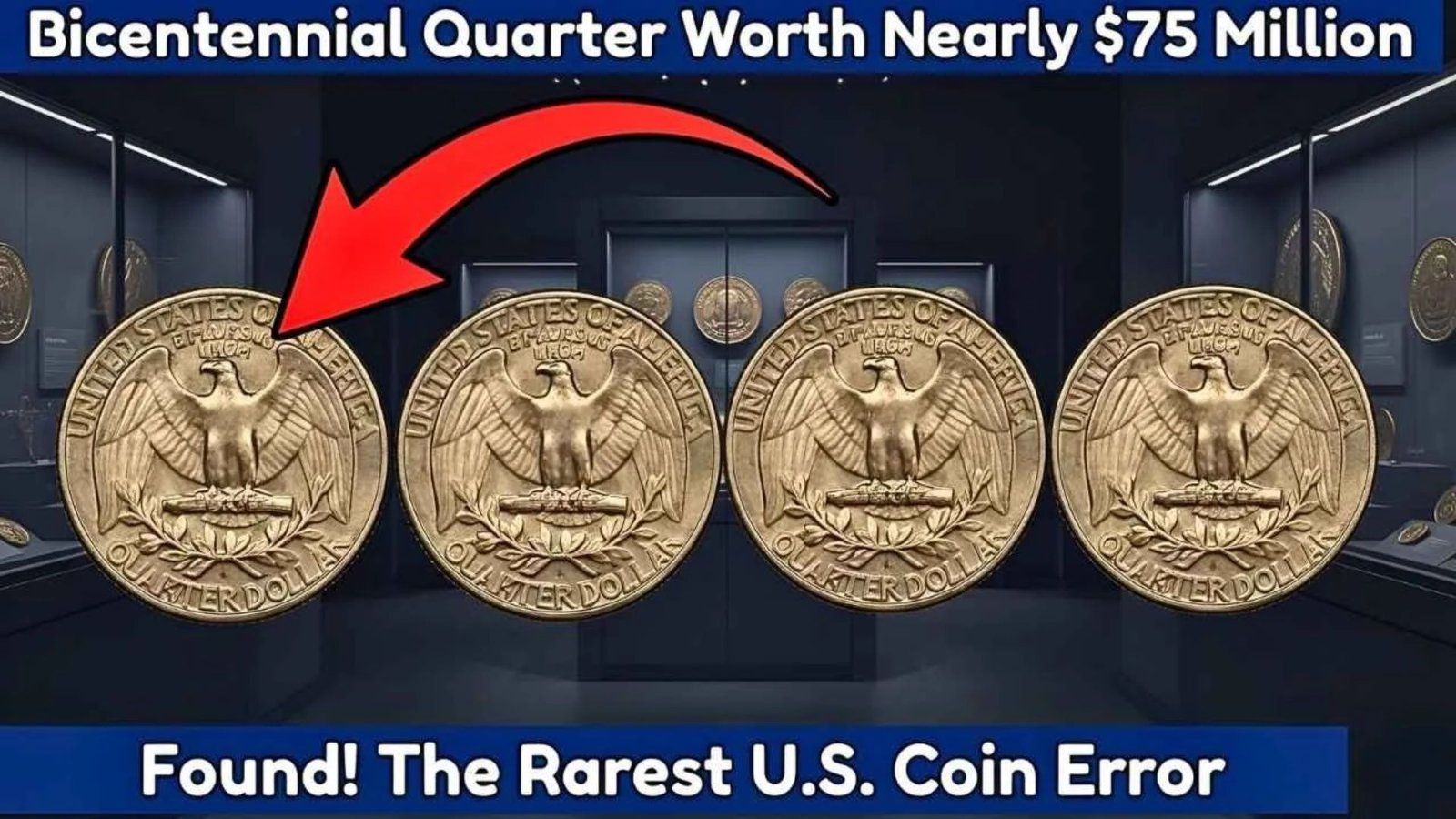
In the world of coin collecting, everyday money can turn into a massive treasure. Imagine finding a simple quarter from your change jar that’s worth millions. That’s the excitement around rare U.S. coins. One standout is the ultra-rare Bicentennial quarter, which experts believe could fetch nearly $75 million in perfect shape. This 1976 coin, made to honor America’s 200th birthday, has a special twist that makes it priceless to collectors.
But this isn’t the only gem out there. Many old or mistaken coins from U.S. history still pop up in daily life. From pennies to dollars, these finds have made ordinary people rich overnight. In this guide, we’ll break down the famous Bicentennial quarter and spotlight four other coins that could boost your bank account. We’ll keep things simple, explain tricky terms, and share tips on spotting these treasures. Whether you’re a newbie collector or just curious about loose change, read on to learn how your next grocery run might uncover a fortune.
What Makes the Bicentennial Quarter So Special?
The Bicentennial quarter hit the scene in 1976, right in the middle of America’s big 200th birthday party. Most quarters back then showed an eagle on the back, but this one swapped it for a cool picture of a colonial drummer boy marching along. It was a fun way to celebrate the Declaration of Independence. Over 1 billion of these coins were made, so they’re super common today—worth just 25 cents if they’re beat up.
The Rare Twist: A Minting Mistake Worth Millions
Here’s where it gets thrilling. Not all Bicentennial quarters are the same. A tiny batch had a minting error—that’s when the U.S. Mint (the factory that stamps out coins) goofed during production. This error involved using a “special metal composition,” or a mix of metals that’s not the usual recipe. Copper, nickel, and other bits go into quarters, but this rare one slipped through with something extra unusual.
Experts whisper that just one or two of these exist, and if you find one in mint-fresh condition (no scratches or wear), it could sell for close to $75 million at auction. Why so much? Rarity drives the price sky-high. Collectors love the story: This coin sneaked into everyday pockets without anyone noticing for decades. It’s like finding a lottery ticket from the 1970s.
Think of it this way—most coins are like common pebbles on a beach. But this one? It’s a diamond hidden in the sand. No one knows exactly where the last one is, sparking hunts in attics and bank bags across the country.
Four Other Rare Coins That Could Change Your Life
If the Bicentennial quarter sounds too dreamy, don’t worry. Plenty of other coins have turned folks into millionaires. Let’s dive into four favorites that might be lurking in your home right now. We’ll explain each one’s backstory, value, and why it’s a big deal.
1. The 1943 Copper Lincoln Penny: A World War II Surprise
During World War II, the U.S. needed every bit of copper for bullets and tanks. So, in 1943, pennies switched from copper to steel—like shiny silver disks instead of the warm reddish ones we know. But a few copper blanks (the flat metal discs before stamping) got mixed in by mistake.
Only about 20 of these copper pennies are known to exist today. One sold for $1.7 million in a recent auction. Imagine pulling this from a kid’s piggy bank or an old lunch money stash. Its value comes from that wartime error—pure history in your palm.
2. The 1913 Liberty Head Nickel: The Ghost Coin
Nickels usually aren’t headline makers, but this one’s legendary. The Liberty Head design (with Lady Liberty’s profile) ended in 1912. The 1913 version? The Mint never planned to make it. Yet, five sneaky ones appeared, possibly made by a rogue worker as a prank.
Each of these five coins is worth $5 million to $10 million. Fun twist: One turned up in a shoebox at a coin shop, mixed with boring nickels. If you spot a 1913 nickel, hold onto it—don’t spend it!
3. The 2004 Wisconsin State Quarter: Nature’s Little Trick
State quarters are a collector’s dream series from 1999 to 2008, each showing a state’s pride. Wisconsin’s features a cow, cheese, and corn stalk. But some have an “extra leaf” error—either high or low on the stalk—like the designer added a bonus veggie by accident.
These aren’t mega-millions, but they’re hot: $200 to $6,000 depending on condition. Grab vending machine change or bank rolls from the Midwest for your best shot. It’s proof even modern coins can surprise.
4. The 1870-S Seated Liberty Dollar: A Wild West Mystery
Picture the Old West: Gold rushes, cowboys, and big silver dollars. The Seated Liberty dollar shows Liberty chilling on a rock. The 1870-S version, made in San Francisco, is super scarce—only about 12 survive.
Valued at $2 million to $3 million, its story adds mystique. Some link it to lost shipwrecks or forgotten mines. If this beauty surfaces at an estate sale, it’s auction gold.
Glossary of Coin Terms: Making It Easy
Coin talk can sound fancy, but it’s simpler than it seems. Here’s a quick table to decode tough words:
| Term | Simple Explanation | Why It Matters for Value |
|---|---|---|
| Mint | The U.S. government factory where coins are made (like Philadelphia or Denver). | Coins from certain mints are rarer. |
| Planchet | The blank metal disc before it’s stamped into a coin. | Wrong planchets cause errors, like the 1943 penny. |
| Mint Mark | A tiny letter (S for San Francisco, D for Denver) on the coin showing where it was born. | Helps spot rare versions fast. |
| Grading | Experts scoring a coin’s condition (1-70 scale; higher is better). | Pristine coins (grade 70) sell for way more. |
| Composition | The recipe of metals in a coin (e.g., 91% copper). | Odd mixes, like in the Bicentennial error, boost rarity. |
Use this as your cheat sheet next time you dig through drawers.
Where to Hunt for These Hidden Treasures
You don’t need a metal detector or fancy gear. Rare coins hide in plain sight:
- Family heirlooms: Check grandma’s cookie jar or attic boxes.
- Everyday spots: Cup holders, washing machine lint traps, or grocery store change.
- Bank hauls: Ask for rolled pennies or quarters—free adventure!
- Sales and swaps: Garage sales, flea markets, or online lots often hide winners.
One lucky finder pulled a million-dollar penny from a parking lot meter. Your turn could be next.
Simple Steps to Verify Your Find
Suspect you’ve got a keeper? Follow these easy steps:
- Eye the basics: Note the year, mint mark (under the date), and any weird looks like double letters or odd colors.
- Snap photos: Clear shots from all angles for experts.
- Skip the scrub: Never clean it—soap or polish wipes out value.
- Call in pros: Send to PCGS or NGC for official checks. They handle everything safely.
These services charge a fee, but it’s worth it for peace of mind.
Conclusion: Turn Change into Change—Your Fortune Awaits
From the jaw-dropping $75 million Bicentennial quarter to wartime pennies and mystery dollars, rare coins prove that history’s gems are closer than you think. These aren’t just shiny objects; they’re stories of mistakes, secrets, and second chances. With billions of coins floating around, anyone can strike it rich—maybe even you.
Start small: Sort your spare change this weekend. Learn the signs, use our glossary, and dream big. Who knows? That dusty quarter could fund your future. Happy hunting, and remember: In numismatics (coin collecting), patience pays off. Stay curious, and keep those eyes peeled!