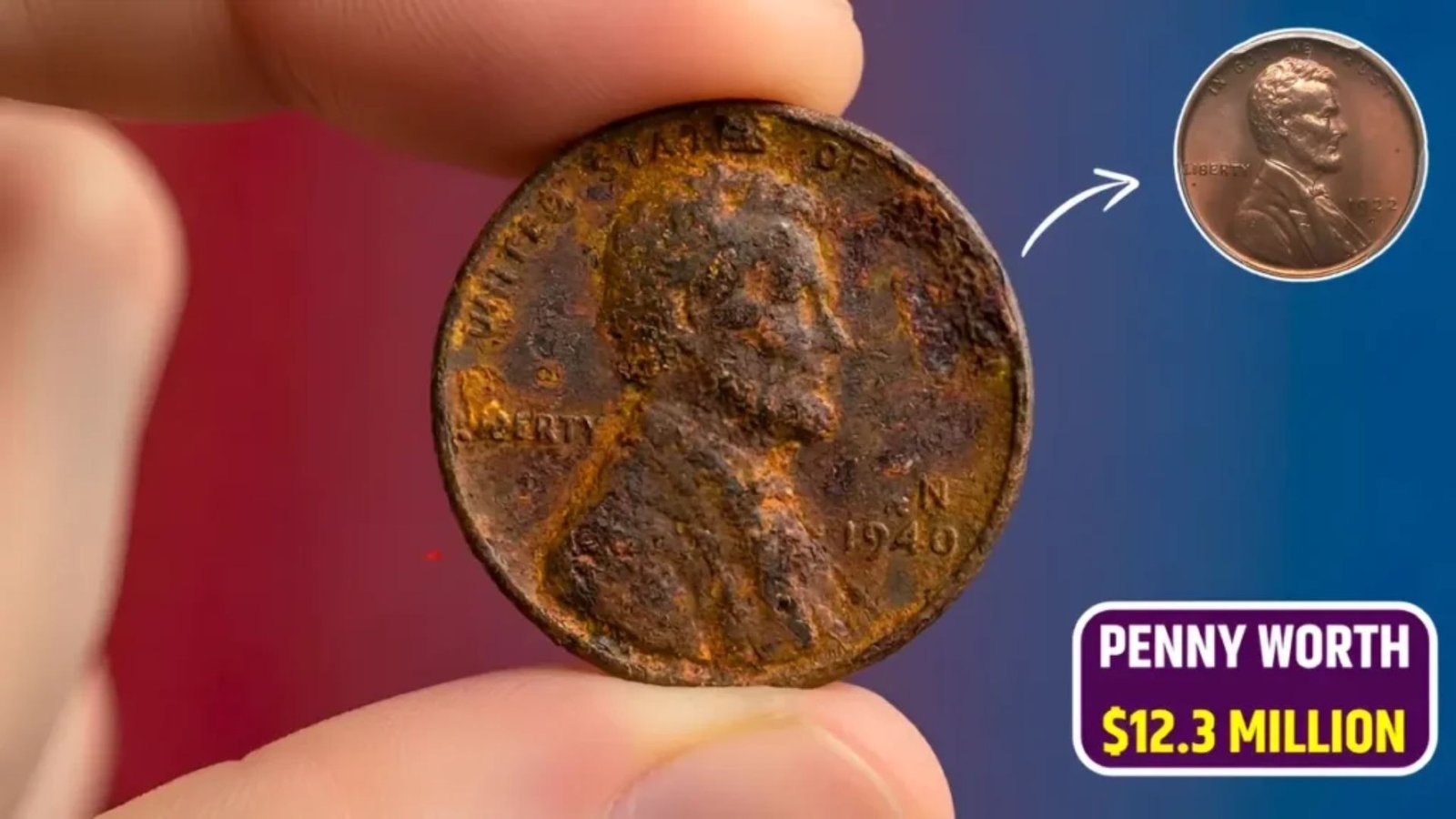
What if the next coin you find in your wallet, coin jar, or pocket change could be worth more than a luxury home? It sounds unbelievable, but a Lincoln Wheat Penny valued at an estimated $12.3 million has sparked excitement among collectors and treasure hunters across the world. Even more surprising? Experts believe this ultra-rare penny may still be in circulation today.
If you’re a coin collector—or simply someone who loves a good mystery—this is one story you don’t want to skip. Let’s break down why this penny is so valuable, what makes it so rare, and how to check if you might be holding the million-dollar prize.
Why This Wheat Penny Is Worth $12.3 Million
Wheat pennies, minted from 1909 to 1958, are already treasured by collectors. But the one valued at $12.3 million is no ordinary coin. Its massive price tag comes from a combination of rarity, condition, and a once-in-a-lifetime mint error.
Here’s what contributes to its extraordinary value:
1. A Critical Minting Mistake
The penny reportedly has a double-die error, meaning parts of the design appear doubled—especially in the date, the lettering, and Lincoln’s profile. Strong doubled-die coins are among the most sought-after in the world.
2. Extremely Limited Survival
Only a tiny number of these error pennies were ever produced, and fewer have survived in collectible condition. Many were spent, lost, cleaned, or damaged—making the surviving ones tremendously valuable.
3. Collector Demand Skyrockets Value
The numismatic community prizes unique or near-unique coins. When demand exceeds rarity, prices soar into millions.
Where Could This Penny Be Now?
One of the most intriguing theories is that this multimillion-dollar wheat penny could still be floating around in everyday circulation. Wheat pennies were minted in the billions, and countless families, banks, and stores still have them tucked away.
Coin experts believe this valuable penny might be:
- Hidden in an old jar or drawer
- Sitting in a family coin collection
- Mixed into circulation rolls at banks
- Accidentally spent in stores
- Unnoticed in personal savings containers
Yes—it is possible that someone used this rare coin without knowing its worth.
How to Identify a Potentially Valuable Wheat Penny
If you want to check your change like a pro, here’s what to look for:
1. The Date and Mint Mark
Many valuable wheat pennies come from specific years such as:
- 1909-S VDB
- 1914-D
- 1922 No D
- 1931-S
- 1943 Bronze (Copper)
- 1955 Doubled Die
If your penny has one of these dates, don’t ignore it.
2. Doubling on Letters and Numbers
Use good lighting and tilt the coin gently. Look for doubling on:
- “LIBERTY”
- “IN GOD WE TRUST”
- The date
- Lincoln’s eye and beard area
Strong doubling is a major clue.
3. Off-Metal Strikes
Some wheat pennies were accidentally struck on the wrong metal—especially the famous 1943 copper penny and 1944 steel penny.
If the color or weight feels unusual, it may be worth a fortune.
4. Condition Matters
Uncirculated or lightly circulated coins can multiply value by thousands.
What to Do If You Think You Found Something Rare
Don’t rush to sell. And never clean the coin, no matter how dirty it looks—cleaning can destroy value.
Instead:
- Take clear photos
- Compare your penny to known error types
- Get a professional grading from PCGS or NGC
- Visit a trusted coin dealer for evaluation
Even if you don’t have the $12.3 million penny, you may still discover a coin worth hundreds or thousands.
Final Thought
Treasure doesn’t always come in gold chests—sometimes, it’s hiding in plain sight inside your pocket. With rare Lincoln Wheat Pennies still surfacing from time to time, the next multimillion-dollar discovery could easily be made by someone who simply took a second look at their change.
So the next time you receive a penny, don’t toss it aside. Check it. Inspect it. It might just make you a millionaire.