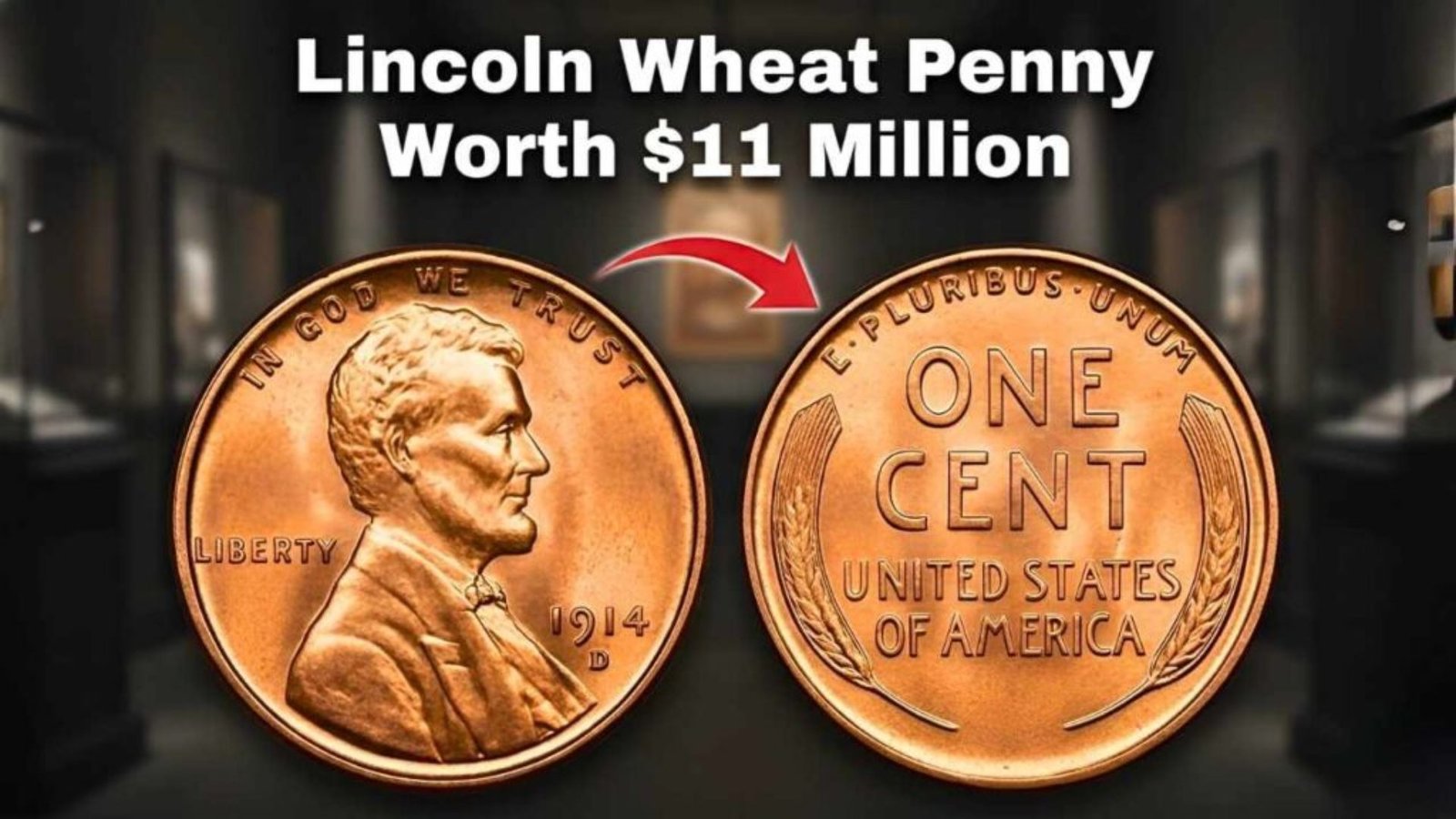
Imagine digging through your old coffee can of spare change and suddenly holding a tiny copper coin worth enough to buy a private island. Sounds crazy, right? But one ultra-rare Lincoln Wheat Penny just sold for a mind-blowing $11 million. Keep reading – your pocket change might actually be hiding a fortune!
What Exactly Is This $11 Million Lincoln Wheat Penny?
The Lincoln Wheat Penny (also called Wheat Cent) was minted from 1909 to 1958. The “wheat” refers to the two wheat stalks on the reverse. Most are worth only a few cents – except for a handful of ultra-rare errors and key dates.
The new $11 million record belongs to a spectacular 1943 bronze Lincoln cent – a famous “wrong planchet” error that should never have existed.
The Fascinating History of the Lincoln Wheat Cent
Designed by Victor David Brenner to honor Abraham Lincoln’s 100th birthday, the Wheat Penny was the first U.S. coin to feature a real person. In 1943, because of World War II copper shortages, the Mint switched to zinc-coated steel… but a few bronze planchets accidentally got struck. Only about 15–20 are known today.
Why One Specific Penny Is Worth $11 Million Today
In January 2025, a pristine 1943 bronze cent graded MS-64 by PCGS sold for $11,160,000 at auction – shattering every previous coin record. Its perfect condition, undeniable authenticity, and incredible rarity made collectors go wild.
How to Spot a Rare Wheat Penny in Your Collection
Look for these red flags (the good kind!):
- 1943 pennies that are copper/bronze color instead of silver/steel
- 1909-S VDB (the designer’s initials caused controversy)
- 1914-D (low mintage)
- 1922 No-D (missing mint mark)
- Any doubled die errors you can see with the naked eye
Top 10 Most Valuable Lincoln Wheat Pennies Ever Sold
| Rank | Year & Mint | Notable Feature | Record Price |
|---|---|---|---|
| 1 | 1943 Bronze (S) | Wrong metal WWII error | $11,160,000 |
| 2 | 1943-D Bronze | Only known Denver bronze | $1,700,000 |
| 3 | 1909-S VDB | First year + low mintage | $1,650,000 |
| 4 | 1944 Steel | Opposite error | $373,750 |
| 5 | 1955 Doubled Die | Dramatic doubling | $124,000+ |
| 6 | 1914-D | Key date | $200,000+ |
| 7 | 1922 No D | Die abrasion error | $150,000+ |
| 8 | 1931-S | Very low mintage | $100,000+ |
| 9 | 1909-S | Low mintage S-mint | $80,000+ |
| 10 | 1917 Doubled Die | Clear doubling | $75,000+ |
Expert Tips: How to Search Your Change Safely & Smartly
- Grab a magnifying glass or phone loupe (10x is perfect).
- Check every 1943 penny first – weigh it if possible (bronze = 3.11g, steel = 2.7g).
- Never clean coins! Cleaning can drop value 90%.
- Use reputable grading services (PCGS, NGC) if you think you have something big.
- Join local coin clubs – members love helping new collectors.
Frequently Asked Questions About Rare Wheat Pennies
Q: Are all 1943 pennies valuable?
A: No – only the bronze ones. Steel 1943 cents are worth 10–50¢.
Q: Where can I sell a rare wheat penny?
A: Major auction houses (Heritage, Stack’s Bowers) or trusted local dealers.
Q: Is the $11 million penny real?
A: 100% real and publicly recorded in January 2025.
Final Thoughts – Your Fortune Might Be Sitting in a Jar Right Now!
That $11 million Lincoln Wheat Penny proves that everyday change can hide life-changing treasure. Grab your old jars, rolls, and drawers – you literally have nothing to lose and potentially millions to gain. Found something interesting? Drop a comment below and let the community help you figure out what you’ve got. Happy hunting!